
On A Roll is my new series of interviews with some inspiring individuals from around the world! As a creative, I firmly believe the only way to keep encouraging myself and others are to start being curious and to discover what they are up to other than their own work. To kick off this project, we have the brilliant Brian Birtles from Mozilla Japan to talk with us about how he got to where he is now.

Brian, what makes you leave the Sunny Australia and move all the way to a country like Japan?
Although I work here in a job I enjoy, my real purpose for being in Japan is because I'm a Christian and not many people in Japan have met a genuine Christian. Most of the people I mix with are very educated and know the story of Jesus but are fascinated to meet someone who actually believes it and lives differently because of their connection with God. I love those interactions, I love the really frank reactions to Jesus I hear, and I'm really glad when people start thinking about their own connection with God.
So while I love travel, and I love living in foreign countries, and I definitely love Japan, I don't think I'd be here or at least not for quite so long if it wasn't for that.
You also travel a lot with your job at Mozilla for organising workshops with developers in various locations like Mountain View, Kathmandu, London, Singapore, Taipei and Barcelona. Can you tell us what are the aims of these workshops?
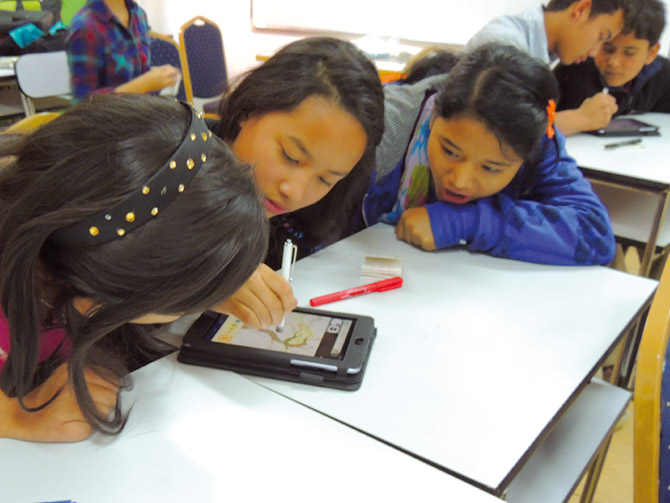
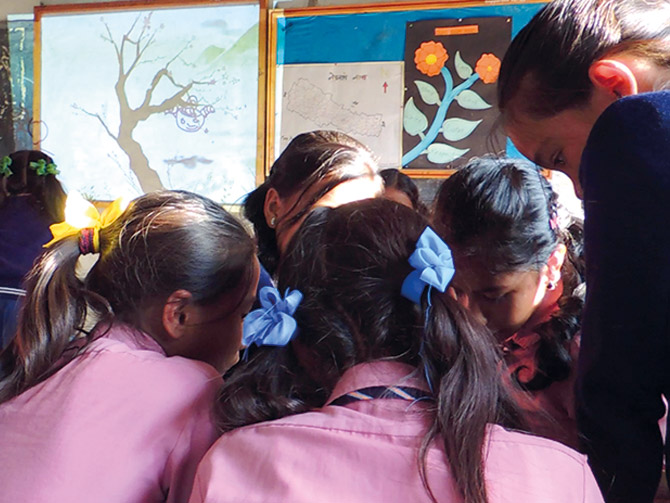
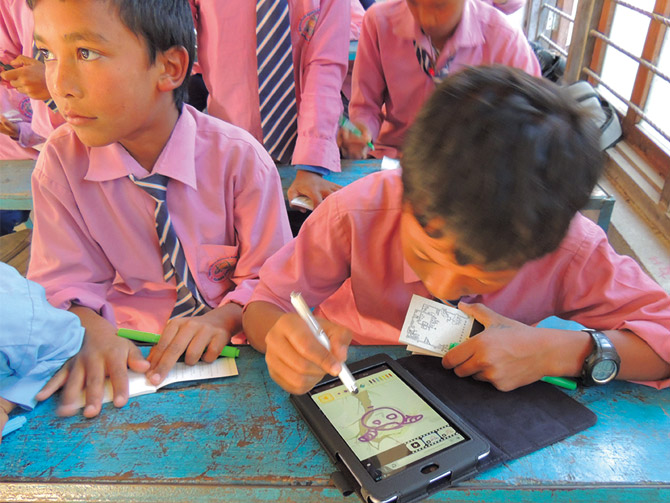
Some of them are just Firefox development meetings, some are standardisation groups I'm involved in, but a number of them are animation workshops we run for kids.
At Mozilla Japan we run a number of hands-on workshops including the Parapara Animation workshop which, roughly translated, means flip-book animation. Kids draw a number of pictures on tablets or phones and then the application plays them back giving the illusion of motion and teaching the kids how animation works. From there the kids can send their creation to a shared canvas projected onto a screen where it forms part of a collaborative story. It's fun and it also gives the kids a chance to experience collaborative creation which is part of the fabric of the Web.
In fact, the whole project is Web-based and so we sometimes do it with adults too and get them to join in by drawing on their smartphones which they can do just by loading up a Web page. We're currently working on making it easy for teachers to setup the workshop in their classroom.
Is it important for you to be involved in a creative community?
Although I love creating things — recently I'm getting back into writing music — I think I prefer building things, especially when it involves solving difficult problems.
At Mozilla Japan we have a lot of contact with creative people, mostly recently with people involved in the maker scene — people doing fabrication projects and open hardware. One of my colleagues is a researcher who spends all his time in that area. Personally, it's not quite my scene but I love hearing people's crazy ideas and saying, "Let's build it." Sometimes the person with the great ideas is not the best person to realise them, or can't take them beyond a prototype. I love being able to help take something from someone's imagination and turn it into a real product.
I think when designers and engineers work together well they can produce amazing things but often personality differences get in the way. Creative communities that include all sorts of people, not just "creatives" are really exciting.
What else do you do other than working as an engineer in Japan?
When I was studying Japanese full-time I started hiking just as a way to escape my desk and relax since the beach was too far. Now the hiking group I started has so many people it's less relaxing (more like a school excursion!) but still a lot of fun, especially the mandatory trip to the hot springs at the end of the hike!
More recently I started a jogging club, got back into swimming, and started riding my bike to work. Eventually I decided to put it all together and do a triathlon here in Tokyo. I have to say, when Japanese people do something, they tend to do it properly. There were a lot of very impressive competitors who made me think that racing on a commuter bike was a mistake. At least I took the basket off. Still, everyone was so welcoming I'd love to do it again.
Apart from exercising, I mentioned that many people are interested in talking to a serious Christian and so I try to create opportunities for that as often as possible. For example, every month or so I gather together at my house people who want to read the Bible.
And of course, whenever there's a spare moment I keep studying Japanese. It never ends! Fortunately I still enjoy it!
Would you recommend anyone to take their careers overseas?
No, not anyone, only some people.
Working overseas will certainly introduce new ways of thinking and can help you to reflect on your own culture and assumptions which can make it an enriching experience professionally and personally. However, I've met some people who weren't prepared for the experience and as a result have come back home with stronger prejudices and a more narrow mindset.
Like language, culture is harder to absorb the older you are. For people who have already started a career and are considering relocating overseas, I think they should be prepared to spend a little time reflecting on culture before they go in order to make the experience a fruitful one.
The other requirement, I would say, is to be clear about your purpose for going. In many cases, working overseas might mean a lower position, or it might mean less respect due to being new and foreign, and there will certainly be trying circumstances and inconveniences. If you don't have a clear purpose these setbacks can be frustrating and make you want to give up.
In my case I would say that the software industry in Japan is less developed than, say, the US. Hardware is still the focus here. So if your purpose is to get a great position, then for a software engineer Japan might not be right. On the other hand if you want to broaden your understanding or if you want to develop the local industry then it could be a great choice. If you have that clear purpose you'll be able to accept any disappointments that accompany the transition.
Personally, I would have a better position and more comfortable lifestyle if I remained in Australia amongst family. But, like I said, I have other reasons for being in Japan and there's nowhere else I'd rather be.
Back to top